'%3e%3cpath%20d='M48.8611%2033.7489V28.6591C47.4125%2030.3035%2045.7681%2031.6347%2043.8888%2032.6135C42.0096%2033.5923%2040.0128%2034.1012%2037.9378%2034.1012C35.6278%2034.0621%2033.4353%2033.6706%2031.4386%2032.8092C29.4027%2031.9479%2027.6017%2030.7733%2026.0357%2029.2073C24.4696%2027.6803%2023.2559%2025.8794%2022.3945%2023.8043C21.5332%2021.7293%2021.1025%2019.5368%2021.1025%2017.266C21.1025%2014.9952%2021.5332%2012.8027%2022.3945%2010.7277C23.2559%208.65261%2024.4696%206.85163%2026.0357%205.28557C27.6017%203.7195%2029.4027%202.50579%2031.4386%201.68361C33.4353%200.82227%2035.6278%200.391602%2037.9378%200.391602C40.0911%200.391602%2042.0879%200.82227%2044.0063%201.72276C45.8856%202.62325%2047.53%203.8761%2048.8611%205.48132V1.05718H54.8905V33.7489H48.8611ZM33.7094%207.204C32.3391%207.75212%2031.1645%208.53516%2030.1857%209.51395C29.2069%2010.4927%2028.4239%2011.6673%2027.8758%2013.0376C27.3277%2014.4079%2027.0536%2015.8174%2027.0536%2017.3051C27.0536%2018.7929%2027.3277%2020.2024%2027.8758%2021.5335C28.4239%2022.8647%2029.2069%2024.0392%2030.1857%2025.018C31.1645%2025.9968%2032.3391%2026.7799%2033.7094%2027.328C35.0797%2027.8761%2036.4892%2028.1502%2037.9769%2028.1502C39.4647%2028.1502%2040.8742%2027.8761%2042.2053%2027.328C43.5365%2026.7799%2044.711%2025.9968%2045.6898%2025.018C46.6686%2024.0392%2047.4516%2022.8647%2047.9998%2021.5335C48.5479%2020.2024%2048.822%2018.7929%2048.822%2017.3051C48.822%2015.8174%2048.5479%2014.4079%2047.9998%2013.0376C47.4516%2011.6673%2046.6686%2010.4927%2045.6898%209.51395C44.711%208.53516%2043.5365%207.75212%2042.2053%207.204C40.8742%206.65588%2039.4647%206.38181%2037.9769%206.38181C36.4892%206.34266%2035.0406%206.65588%2033.7094%207.204Z'%20fill='white'/%3e%3cpath%20d='M6.8907%201.1354C8.49592%200.391517%2010.2186%200%2012.0587%200V5.95106C10.2577%205.95106%208.80914%206.57749%207.63458%207.83034C6.38173%209.1615%205.7553%2010.7276%205.7553%2012.4502V33.7488H0V12.4502C0%2010.062%200.626427%207.83034%201.84013%205.83361C3.05383%203.79772%204.73736%202.2708%206.8907%201.1354Z'%20fill='white'/%3e%3cpath%20d='M20.3196%203.36705C18.9884%204.93312%2017.9313%206.65579%2017.07%208.53507C16.9134%208.30016%2016.6785%208.06525%2016.4827%207.83034C15.3082%206.57749%2013.8596%205.95106%2012.0586%205.95106V0C13.8987%200%2015.6214%200.391517%2017.2266%201.1354C18.362%201.76183%2019.4191%202.50571%2020.3196%203.36705Z'%20fill='white'/%3e%3cpath%20d='M127.713%2013.6639V33.7487H121.84V13.6639C121.84%2011.6672%20121.096%209.90534%20119.648%208.45672C118.238%207.04726%20116.476%206.30338%20114.44%206.30338C112.405%206.30338%20110.643%207.00811%20109.233%208.45672C107.745%209.94449%20107.041%2011.6672%20107.041%2013.6639V33.7487H101.168V13.6639C101.168%2011.8238%20101.52%2010.1011%20102.225%208.45672C102.93%206.81235%20103.869%205.40289%20105.083%204.18919C106.336%202.93633%20107.785%201.95754%20109.39%201.29196C111.034%200.587229%20112.718%200.234863%20114.519%200.234863C116.32%200.234863%20118.003%200.587229%20119.648%201.29196C121.292%201.99669%20122.701%202.97548%20123.954%204.18919C125.168%205.40289%20126.108%206.81235%20126.812%208.45672C127.36%2010.1011%20127.713%2011.8238%20127.713%2013.6639Z'%20fill='white'/%3e%3cpath%20d='M66.7536%2033.7486H59.5889L79.3996%200.273926H86.5252L66.7536%2033.7486Z'%20fill='%2376BC21'/%3e%3cpath%20d='M72.6262%2047.9999H65.4614L93.6898%200.273926H100.855L72.6262%2047.9999Z'%20fill='%2376BC21'/%3e%3c/g%3e%3cdefs%3e%3cclipPath%20id='clip0_866_4589'%3e%3crect%20width='127.713'%20height='48'%20fill='white'/%3e%3c/clipPath%3e%3c/defs%3e%3c/svg%3e)
Available Now, Native Next
By Syed Abdullah Abbas Sohail · July 13, 2026 · 2,370 words
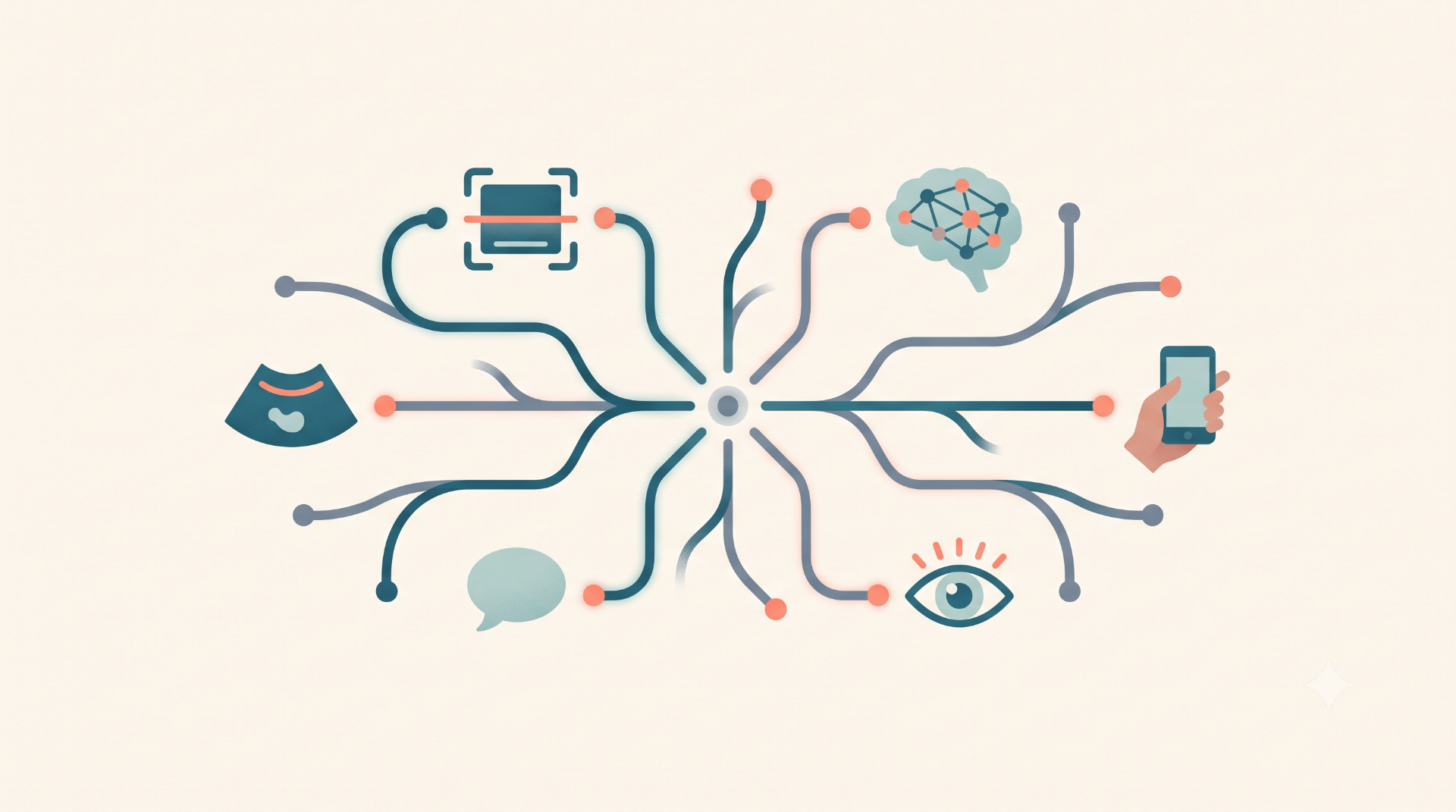
The world's leading healthcare AI tools already exist, and they can serve Pakistan's biggest health gaps today. The deeper opportunity is to treat them as a blueprint, and build native, Urdu-first versions that Pakistan owns.
A guide to the tools, the use cases waiting here, and the case for making them our own.
There is a temptation, in any conversation about AI and Pakistani health, to talk about pilots and prototypes, things that might exist one day. That framing is now out of date. Over the past two years the global healthcare AI frontier has moved with startling speed, and a great deal of what it produced is not a research curiosity but a working tool, available off the shelf, already deployed across dozens of countries. Pakistanis are using some of it informally already; Microsoft alone reports more than 50 million health-related conversations a day across its consumer AI products.
So the useful question has two halves. First, which of the tools the world has already built map onto Pakistan's specific gaps: a country with roughly one doctor per 1,000 people, fewer than 500 psychiatrists, the highest diabetes prevalence on earth, and the fifth-heaviest tuberculosis burden. And second, where these tools point the way to something Pakistan should build for itself, in its own languages, on its own data, under its own control. What follows is a guide to both.
1. The AI Radiologist: Imaging Tools That Read a Scan in Seconds
The most deployment-ready category is medical imaging AI, software that reads a scan in seconds with accuracy rivalling a specialist. Since 2021, the World Health Organization has endorsed AI chest-X-ray software as a substitute for human readers when screening for tuberculosis, and several mature, clinically validated systems exist. Lunit INSIGHT CXR, from the South Korean company Lunit, flags eleven major chest abnormalities at very high accuracy and supports TB screening; CAD4TB, from the Dutch firm, Delft Imaging, is purpose-built for tuberculosis. These tools run on the chest X-ray and decide, without a radiologist, who is likely to be sick.
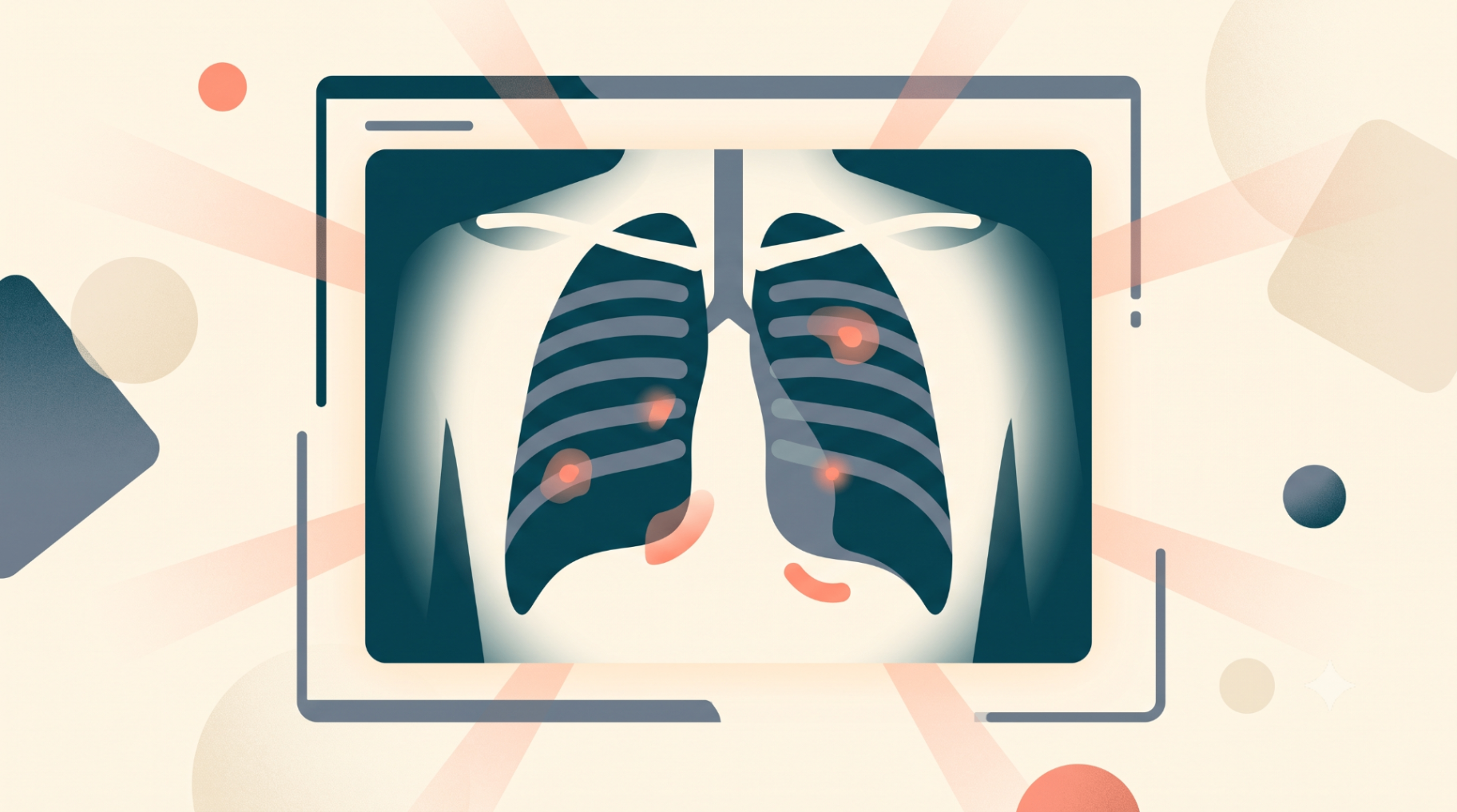
The Pakistani use case writes itself. Pakistan carries one of the world's heaviest TB burdens, and the bottleneck has always been the shortage of radiologists to read films during active case-finding. An AI reader mounted on a mobile X-ray unit can screen an entire community and refer only the flagged cases for a confirmatory lab test, putting a scarce resource where it counts.
The same class of tool, applied to head CT, can speed stroke care, where the minutes before treatment decide whether a patient lives. The native opportunity sits one step beyond adoption: every scan Pakistan reads is training data, and validating, then eventually retraining, these models on Pakistani patients and local disease patterns is how the country moves from renting an imported algorithm to owning one tuned to its own people.
2. The AI Doctor's Mind: Medical Large Language Models
The headline frontier is the medical large language model, and the leading systems are genuinely extraordinary. Google's Med-Gemini family reaches state-of-the-art scores on medical licensing benchmarks and can reason across X-rays, scans, and a patient's full record at once. Its AMIE system conducts a diagnostic conversation, taking a history, asking follow-up questions, and proposing a differential, and in a blinded study it matched or outscored primary-care physicians on both diagnostic accuracy and the empathy of its dialogue.
Microsoft's MAI-DxO orchestrates a panel of AI "specialists" that debate a case; on 304 of the toughest diagnostic cases from the New England Journal of Medicine, it reached the correct diagnosis around 85 percent of the time, against roughly 20 percent for a panel of experienced physicians, while ordering fewer tests.
Two honest caveats matter. These flagship systems are still research, not products a clinic can license tomorrow, and they were built and tested largely on Western data and in English. But the general-purpose versions, ChatGPT, Gemini, Copilot, are available today, and Pakistanis already consult them.
For a country with one doctor per 1,000 people, the realistic near-term use is not autonomous diagnosis but decision support: helping an overstretched rural medical officer reason through a differential, or triaging which patients in a long queue need urgent attention. This is also the clearest place where a native tool matters. An Urdu-first medical assistant, tuned on Pakistani clinical guidelines and local disease patterns and built on top of an available foundation model, would serve Pakistani patients far better than an English system trained for another country, and it would keep sensitive health data inside Pakistan rather than on a foreign server.
3. The AI in the Health Worker's Hand: An Assistant for the Last Mile
The single most transferable idea for Pakistan is the AI assistant built not for patients or specialists, but for community health workers. The recipe is now well understood: take a capable foundation model, GPT-4, Gemini, or Claude, wrap it in a simple WhatsApp interface, and let a frontline worker who hits a question she cannot answer in the field, about a childhood immunization, a breastfeeding problem, a danger sign in pregnancy, send it by text or voice note and receive an evidence-based answer in seconds, in her own language. Versions of this have already been deployed for community health workers in low-resource settings, and the results are encouraging.

Pakistan has its own fleet for exactly this: the roughly 100,000 women of the Lady Health Worker programme, the public system's main link to rural households. This is the most practical, lowest-cost, highest-leverage AI deployment imaginable here, and it is also the strongest candidate for building native rather than borrowing.
A Pakistani assistant trained on the country's own immunization schedules, maternal protocols, and disease patterns, speaking Urdu and the major regional languages, running on the phones these workers already carry, would not replace the worker; it would put a continuously updated reference and a second opinion in her pocket. The foundation models to build it are globally available. The clinical knowledge, the language, and the trust have to be Pakistani.
4. The AI Eye Clinic: Screening Pakistan's Silent Epidemic
Pakistan has the unwelcome distinction of having the highest comparative diabetes prevalence in the world, around 33 million adults, which makes diabetic retinopathy, a leading and preventable cause of blindness, a looming mass disability. Catching it requires photographing the back of the eye and reading the image, a task AI now performs at specialist level in under a minute. Google's ARDA system has been deployed for retinopathy screening in several countries, and companies such as the US AEYE Health grade a single retinal image almost instantly on a low-cost camera.
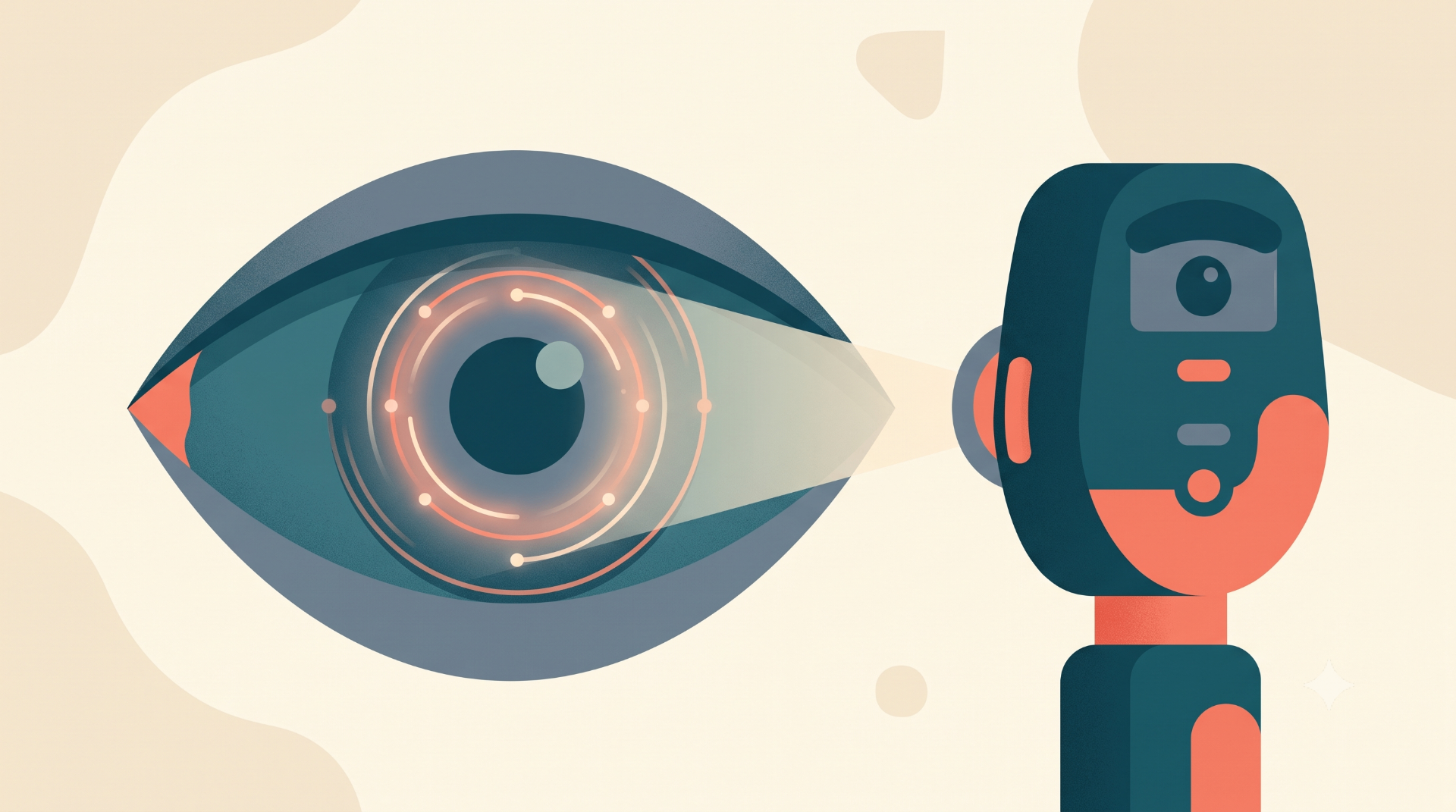
For Pakistan, attaching automated retinal screening to primary-care clinics, diabetes camps, or the Lady Health Worker network is one of the clearest near-term wins available. The disease burden is enormous and growing, ophthalmologists are scarce and urban, and the tool is mature, fast, and cheap to run on a handheld fundus camera.
It converts a blindness most Pakistani diabetics will never be screened for into something a technician can catch in a single visit, and a screening program at national scale generates exactly the labelled local imagery a Pakistani-validated model would need.
5. The AI Therapist: Closing an Almost Total Mental-Health Gap
Nowhere is the human shortfall starker than in mental health, where fewer than 500 psychiatrists serve some 240 million people and roughly nine in ten of those who need care receive none. The globally available tool here is the clinically governed mental-health chatbot. Britain's NHS offers the clearest model: Limbic, a UK system and the first certified as a medical device in its class, is used across NHS talking-therapy services, and a study of more than 129,000 patients across 28 sites found that services using it saw referrals rise, with notable gains among ethnic-minority patients. Separately, the first randomized controlled trial of a generative-AI therapy chatbot, Dartmouth's Therabot, reported meaningful reductions in depression and anxiety symptoms.

The fit for Pakistan is obvious: private, anonymous support sidesteps the heavy stigma that keeps Pakistanis from seeking mental-health care. But this is also the domain where a native build is least optional. A mental-health tool has to understand the idioms of distress in Urdu and the country's regional languages, the social pressures specific to Pakistani families, and it must carry a crisis pathway wired to Pakistani helplines and services, not foreign ones.
The essential caveat holds in every language: these tools are designed for everyday stress, low mood, and resilience-building, not for crisis or severe illness. They are the first, low-intensity rung of a stepped-care system, supporting the many while routing the seriously unwell to the few human professionals who exist. Deployed without that crisis pathway and that honesty, they are a hazard rather than a help.
6. The AI Sonographer: A Scan for Every Pregnancy
The last tool addresses a gap that costs lives at birth. In much of rural Pakistan a woman may go through an entire pregnancy without a single ultrasound, because the machine is costly and the trained sonographer absent. AI-guided ultrasound dissolves that barrier.
Devices such as the Butterfly iQ, a probe that plugs into a phone, now carry AI that lets a minimally trained health worker sweep it across the abdomen while the software estimates gestational age and flags a dangerous fetal position. The approach has been validated in trials that included Pakistani sites and is being rolled into maternal programs across sub-Saharan Africa with Gates Foundation backing.
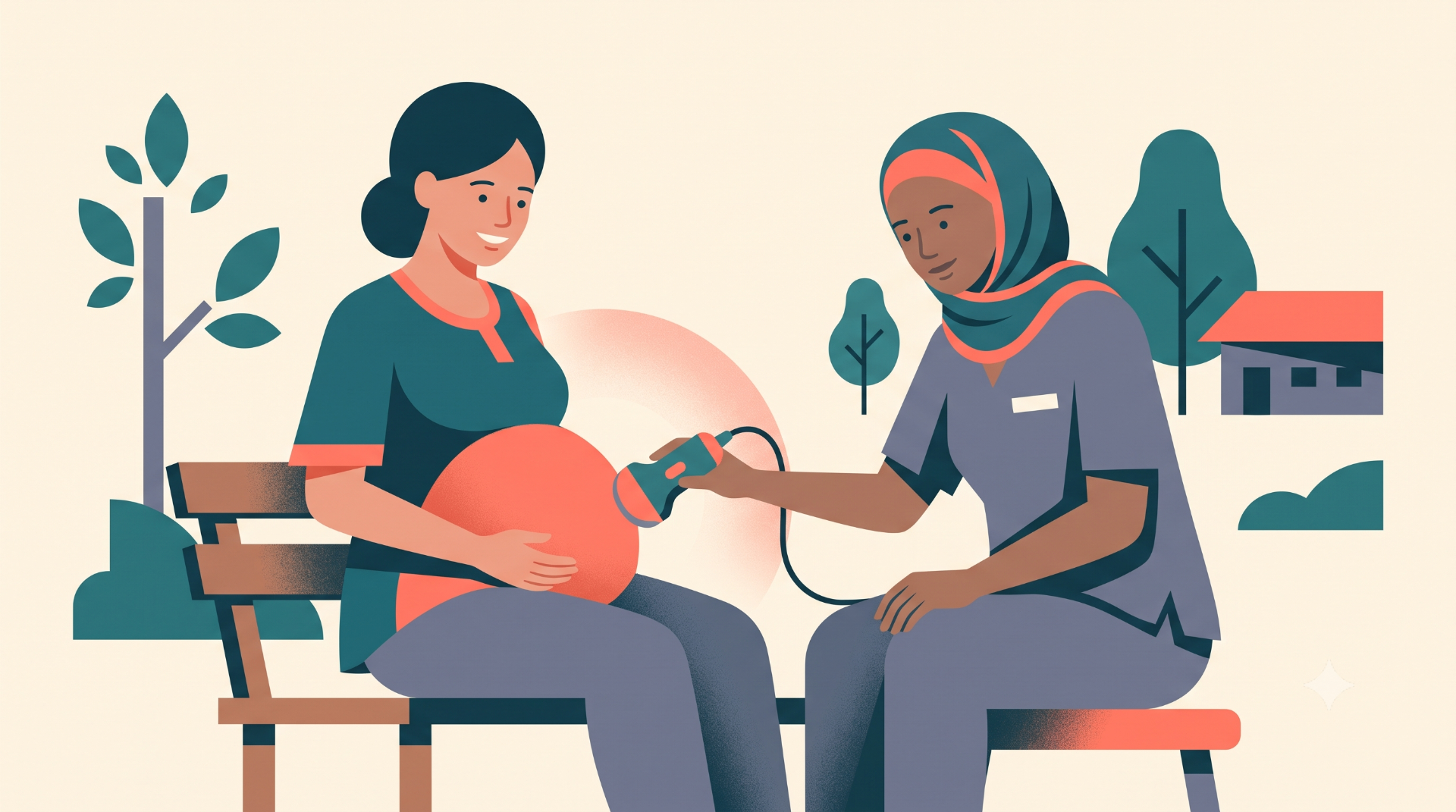
For a country with stubbornly high maternal and newborn mortality, putting AI ultrasound in the hands of Lady Health Workers and rural midwives means the basic checks of safe pregnancy (dating, position, multiple babies) can finally reach the women who never see a specialist.
The Work That Is Actually Pakistan's
Step back and the division of labour is clear. The hard science of medical AI, the models, the training, the validation against the world's toughest cases, has largely been done elsewhere, and much of the result is available now. Imaging AI reads scans in dozens of countries. Validated mental-health tools support millions inside national health systems. The foundation models needed to build a frontline assistant are a download away. None of this needs to be invented in Pakistan.
What does need to happen in Pakistan is the work an implementation partner exists to do, and it is more than installation. Each tool has to be validated on Pakistani patients, disease patterns, and languages, not assumed to transfer from Western or other foreign data. Each has to be embedded in a real delivery channel, the Lady Health Worker programme, the basic health units and rural health centres, the Sehat Sahulat scheme, so that an alert leads to an action. Each has to be governed in a country that, as yet, has none of the AI-specific health regulations now emerging elsewhere.
And running through all of it is a question of ownership. Relying indefinitely on foreign tools, and sending the most sensitive data a citizen has to servers beyond Pakistan's borders and laws, is not a stable foundation for a national health system.
So the honest reading is this. Use what exists, now, where it saves lives: the imaging readers, the retinal screeners, the AI ultrasound. But treat each one as a working blueprint, and build the native, Urdu-first, locally governed versions that Pakistan controls. The frontier has already arrived. The next move is to make it Pakistani.
Technical & Medical References
Figures reflect the most recent data available as of mid-2026.
Pakistan's Care Gaps (The Use Cases)
- Universal Health Coverage in Pakistan: The Lancet Regional Health Southeast Asia / PMC Study
- Diabetes Prevalence Metrics: International Diabetes Federation (IDF) Atlas
- Diabetes Care Gaps Factsheet: Health Policy Watch Feature
- Mental Health Care Infrastructure: WHO-AIMS Assessment (Int. Journal of Mental Health Systems)
Medical Imaging AI
- CXR Chest Scan AI: Lunit INSIGHT CXR Product Details
- WHO Computer-Aided Tuberculosis Policy: WHO Computer-Aided TB Policy Statement
Medical Large Language Models
- Google Research Medical Advancements: Google Med-Gemini Technical Release
- AMIE Clinical Communication Diagnostic: Google AMIE Disease Management in Nature
- Microsoft Path to Medical Superintelligence: Microsoft MAI-DxO Deep Dive
AI Retinal & Diabetic Screening
- Retinal Deployment in Public Health: JMIR Real-World AI Retina Screening Study
- StartUs AI Innovation Matrix: AEYE Health Retinal Scanning Guide
AI Mental-Health Systems
- Limbic Access Trial Performance: Nature Medicine Limbic NHS Evaluation
- Demystifying AI Talking Therapies: NHS Confederation Talking Therapies Report
- Dartmouth Therabot NEJM Trial: Therabot NEJM AI Randomized Controlled Trial
AI-Guided Maternal Ultrasound
- Blind Ultrasound Sweeps in Low-Resource Settings: NEJM Evidence Multi-Country Trials
- Butterfly Network Handheld Maternal AI: Butterfly Network Gestational Age AI Africa Release