'%3e%3cpath%20d='M48.8611%2033.7489V28.6591C47.4125%2030.3035%2045.7681%2031.6347%2043.8888%2032.6135C42.0096%2033.5923%2040.0128%2034.1012%2037.9378%2034.1012C35.6278%2034.0621%2033.4353%2033.6706%2031.4386%2032.8092C29.4027%2031.9479%2027.6017%2030.7733%2026.0357%2029.2073C24.4696%2027.6803%2023.2559%2025.8794%2022.3945%2023.8043C21.5332%2021.7293%2021.1025%2019.5368%2021.1025%2017.266C21.1025%2014.9952%2021.5332%2012.8027%2022.3945%2010.7277C23.2559%208.65261%2024.4696%206.85163%2026.0357%205.28557C27.6017%203.7195%2029.4027%202.50579%2031.4386%201.68361C33.4353%200.82227%2035.6278%200.391602%2037.9378%200.391602C40.0911%200.391602%2042.0879%200.82227%2044.0063%201.72276C45.8856%202.62325%2047.53%203.8761%2048.8611%205.48132V1.05718H54.8905V33.7489H48.8611ZM33.7094%207.204C32.3391%207.75212%2031.1645%208.53516%2030.1857%209.51395C29.2069%2010.4927%2028.4239%2011.6673%2027.8758%2013.0376C27.3277%2014.4079%2027.0536%2015.8174%2027.0536%2017.3051C27.0536%2018.7929%2027.3277%2020.2024%2027.8758%2021.5335C28.4239%2022.8647%2029.2069%2024.0392%2030.1857%2025.018C31.1645%2025.9968%2032.3391%2026.7799%2033.7094%2027.328C35.0797%2027.8761%2036.4892%2028.1502%2037.9769%2028.1502C39.4647%2028.1502%2040.8742%2027.8761%2042.2053%2027.328C43.5365%2026.7799%2044.711%2025.9968%2045.6898%2025.018C46.6686%2024.0392%2047.4516%2022.8647%2047.9998%2021.5335C48.5479%2020.2024%2048.822%2018.7929%2048.822%2017.3051C48.822%2015.8174%2048.5479%2014.4079%2047.9998%2013.0376C47.4516%2011.6673%2046.6686%2010.4927%2045.6898%209.51395C44.711%208.53516%2043.5365%207.75212%2042.2053%207.204C40.8742%206.65588%2039.4647%206.38181%2037.9769%206.38181C36.4892%206.34266%2035.0406%206.65588%2033.7094%207.204Z'%20fill='white'/%3e%3cpath%20d='M6.8907%201.1354C8.49592%200.391517%2010.2186%200%2012.0587%200V5.95106C10.2577%205.95106%208.80914%206.57749%207.63458%207.83034C6.38173%209.1615%205.7553%2010.7276%205.7553%2012.4502V33.7488H0V12.4502C0%2010.062%200.626427%207.83034%201.84013%205.83361C3.05383%203.79772%204.73736%202.2708%206.8907%201.1354Z'%20fill='white'/%3e%3cpath%20d='M20.3196%203.36705C18.9884%204.93312%2017.9313%206.65579%2017.07%208.53507C16.9134%208.30016%2016.6785%208.06525%2016.4827%207.83034C15.3082%206.57749%2013.8596%205.95106%2012.0586%205.95106V0C13.8987%200%2015.6214%200.391517%2017.2266%201.1354C18.362%201.76183%2019.4191%202.50571%2020.3196%203.36705Z'%20fill='white'/%3e%3cpath%20d='M127.713%2013.6639V33.7487H121.84V13.6639C121.84%2011.6672%20121.096%209.90534%20119.648%208.45672C118.238%207.04726%20116.476%206.30338%20114.44%206.30338C112.405%206.30338%20110.643%207.00811%20109.233%208.45672C107.745%209.94449%20107.041%2011.6672%20107.041%2013.6639V33.7487H101.168V13.6639C101.168%2011.8238%20101.52%2010.1011%20102.225%208.45672C102.93%206.81235%20103.869%205.40289%20105.083%204.18919C106.336%202.93633%20107.785%201.95754%20109.39%201.29196C111.034%200.587229%20112.718%200.234863%20114.519%200.234863C116.32%200.234863%20118.003%200.587229%20119.648%201.29196C121.292%201.99669%20122.701%202.97548%20123.954%204.18919C125.168%205.40289%20126.108%206.81235%20126.812%208.45672C127.36%2010.1011%20127.713%2011.8238%20127.713%2013.6639Z'%20fill='white'/%3e%3cpath%20d='M66.7536%2033.7486H59.5889L79.3996%200.273926H86.5252L66.7536%2033.7486Z'%20fill='%2376BC21'/%3e%3cpath%20d='M72.6262%2047.9999H65.4614L93.6898%200.273926H100.855L72.6262%2047.9999Z'%20fill='%2376BC21'/%3e%3c/g%3e%3cdefs%3e%3cclipPath%20id='clip0_866_4589'%3e%3crect%20width='127.713'%20height='48'%20fill='white'/%3e%3c/clipPath%3e%3c/defs%3e%3c/svg%3e)
Changing Minds, Changing Futures
By Aatif Hussain · July 14, 2026 · 834 words
Across Punjab's fields and streets, silent stories live behind closed doors, where health questions stay unspoken and old myths shape everyday choices. In one home, a newly married woman dreams of tomorrow, of a family built on love rather than pressure. She fears a pregnancy that arrives too soon, a future decided before she is ready. Then come the whispers of "waris," the longing for a son to carry the family name. Daughter after daughter, the pressure returns, and her health, her dreams, and her peace of mind are quietly set behind what everyone else expects of her. Her husband longs to understand. He wants to be a partner and not only a provider, yet the words are unfamiliar and he does not know how to begin.
In another home, an elder believes that many children bring strength and security, that a son is the keeper of tradition, while the quiet costs of that belief go unseen: a mother's exhaustion, her worry, her failing health. And nearby, young voices wait in silence, carrying questions no one will answer, wondering about their health and their future but finding no safe space to ask.
Every one of these lives unfolds against a much larger backdrop. Humanity must now balance finite resources against a global population that reached 8 billion in 2022 and is projected to reach 9.7 billion by 2050. Family planning has become an essential foundation for human rights, economic stability, and maternal health. Population can multiply much faster than the resources needed to sustain it, and the reproductive choices we make today will shape the future of our societies and our planet.
Pakistan sits at the heart of this challenge as the fifth most populous country in the world. Over the past 75 years, its population has grown by roughly 600%, expanding by nearly 3.8 million people every year.
As Pakistan's demographic centre, Punjab carries a significant share of that growth. It presents a mixed reproductive-health landscape: 56.8% of reproductive-age women report a demand for family planning, yet real gaps in awareness, access, and acceptance remain. These gaps are shaped by cultural taboos, fears about side effects, service barriers, and limited communication between partners. The human cost is visible in Punjab's maternal mortality ratio of 157 deaths per 100,000 live births, with closely spaced pregnancies a major contributor. A persistent 16.7% unmet need for family planning marks the distance between what women intend and the services they can actually reach.
One Conversation at a Time
Sometimes the most powerful change begins not in a hospital or a policy document, but in a single honest conversation. For years, family planning has been one of the most misunderstood and sensitive subjects in society, and every unanswered question is a missed opportunity for a healthier mother, a stronger family, a brighter future. Recognising this silent challenge, Rayn Group set out to change not only what people know about family planning, but how they talk about it. By placing health, family wellbeing, and informed choice at the centre of its advocacy, the organisation has worked to turn a difficult topic into a conversation about hope, responsibility, and healthier lives.
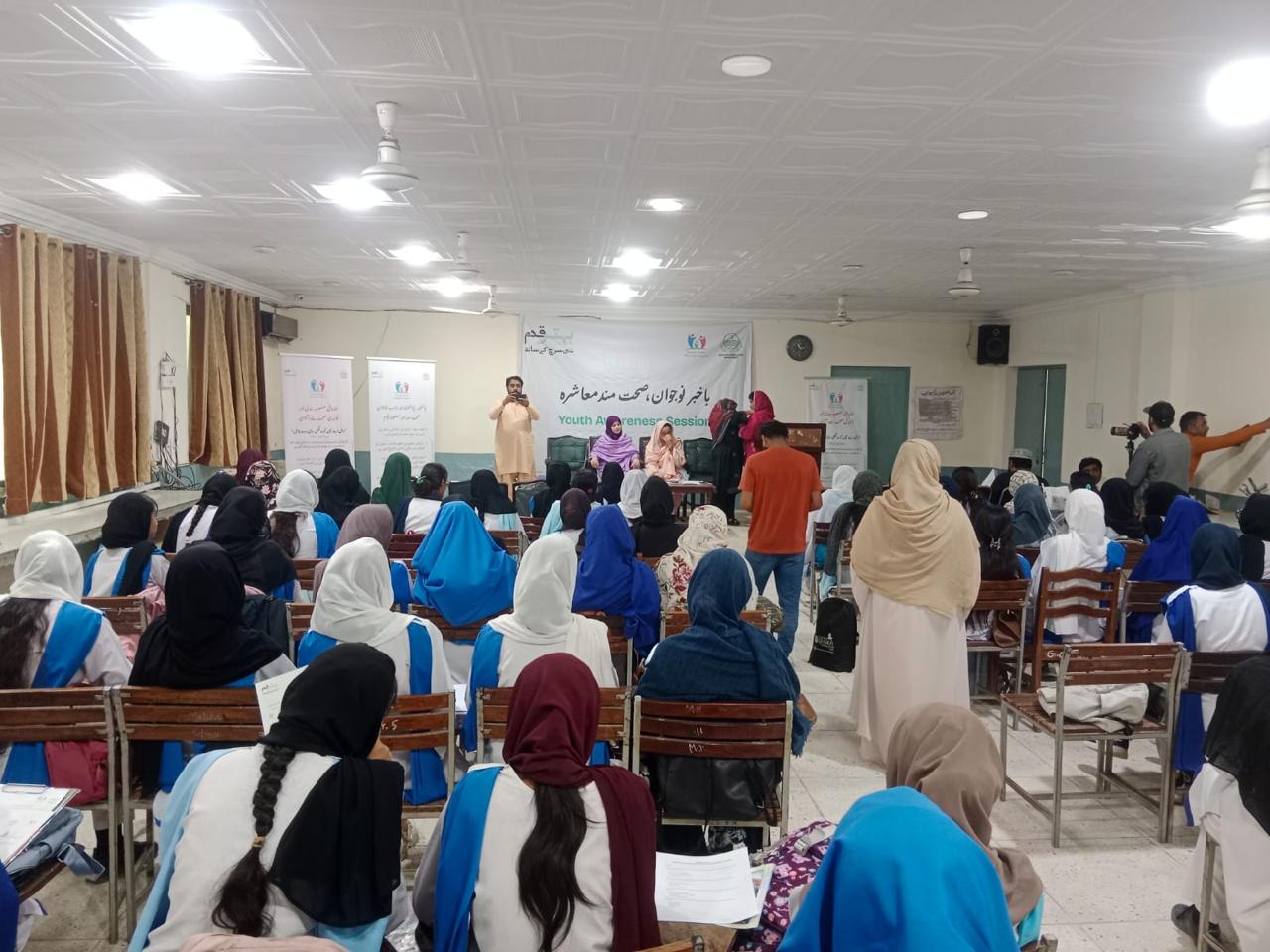
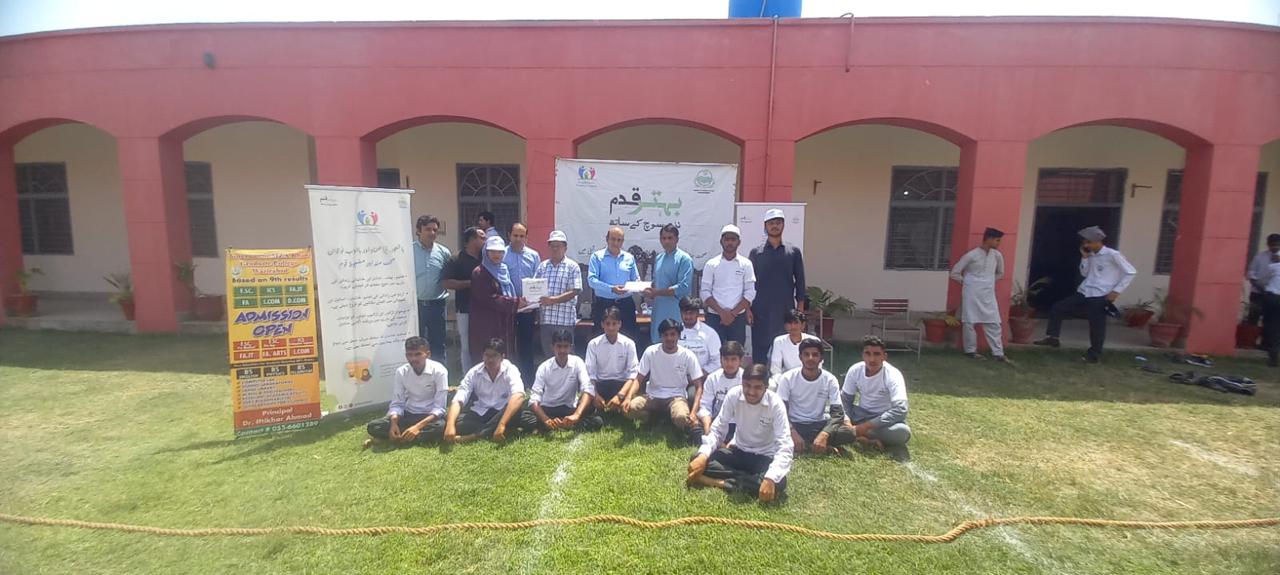
Rather than waiting for people to seek information, Rayn took the dialogue directly into communities. Universities and colleges, sports events, health fairs, gatherings of civil-society organisations, and discussions with religious scholars all became platforms for open exchange. Questions once left hanging finally found space to be heard, misconceptions were met with evidence, and silence slowly gave way to understanding. These are far more than awareness activities. They build trust and strengthen the fabric of community engagement, where one honest exchange inspires the next.
A defining strength of the initiative is its commitment to evidence over assumption. Instead of gravitating toward major cities or easily reached areas, the team studied population density, contraceptive prevalence, unmet need, and literacy rates to identify the districts where awareness was needed most. This ensured that advocacy reached the communities most often overlooked, particularly across Southern Punjab. Every decision for prioritisation of target audience was driven by need rather than convenience, and populations long left on the margins were finally brought into the focus.
The scale of the work reflects both its ambition and its purpose. Across the implementation period, 1,292 advocacy activities were planned: 600 seminars in universities and colleges, 252 sports-branding events, 246 meetings with religious scholars, 164 community health fairs (Sehat Melas), and 30 engagements with civil-society organisations and other stakeholders. But these figures are more than a tally of events. Behind every number is a person: a student who found an answer, a parent who gained confidence, a community leader who challenged a myth, a family taking its first step toward a healthier future.
Through evidence-led planning and genuine community engagement, Rayn wants to show that lasting public-health transformation can begin with something as simple as a conversation, one with the power to change not just a life, but a generation.
Technical & Demographics References
- Global Demographic Baselines: United Nations, Department of Economic and Social Affairs, Population Division. World Population Prospects 2022. The global population reached 8 billion on 15 November 2022 and is projected to reach 9.7 billion by 2050.
- National Census Registry: Pakistan Bureau of Statistics, 7th Population and Housing Census 2023 (population 241.5 million; average annual growth rate 2.55%).
- Provincial Survey Inquiries: Punjab Bureau of Statistics, Multiple Indicator Cluster / Family Planning Survey 2024 (demand for family planning 56.8%; unmet need 16.7%; contraceptive use 40.1%).
- Maternal Health Status Metrics: National Institute of Population Studies, Pakistan Maternal Mortality Survey (PMMS) 2019 (Punjab MMR 157 per 100,000 live births; national MMR 186).